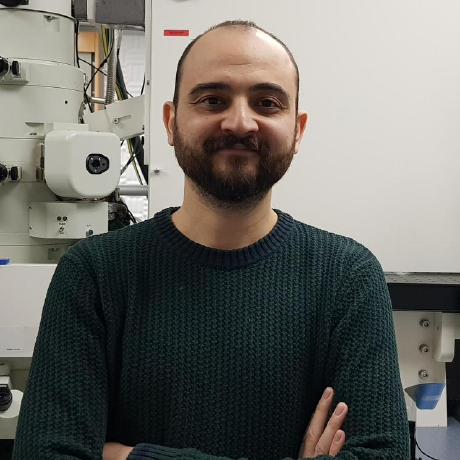
Tugrul Guner · AI Engineering Manager at CDAI · Toronto

I lead AI engineering and architect the systems behind it.

I lead two cross-functional pods across more than six products and build high-performing teams. I operate well under pressure, making difficult decisions without lowering engineering standards while staying hands-on architecting scalable, robust backend, AI, and agentic systems designed to adapt.

Tugrul Guner

ModePot creator · Contributor to Hermes Agent and Superpowers

Earlier physics and materials-science research · 30 journal publications · 1 patent · 1,000+ citations

That work shaped the analytical, evidence-led mindset I bring to innovation and uncertainty.

01 Leadership & career

Teams and engineering systems built to perform.

My career has grown from designing production infrastructure to hiring teams, establishing how they work, and taking responsibility for a portfolio of AI products.

Jan 2026–presentToronto, Ontario, Canada

AI Engineering Manager

CDAI

  • Lead two separate cross-functional pods of five and seven people across a portfolio of more than six products, with responsibility for technical direction, cross-team alignment, and delivery.
  • In under six months, led one pod to a 2.5× increase in feature and product delivery velocity and helped the team launch three products.
  • That delivery improvement led to responsibility for the second pod; I now manage a portfolio of more than six products across both.
  • Helped deliver a recommendation system that improved menu-item attachment rate by 4×.
  • Remain hands-on: prototype ideas, make architectural changes, deliver production work, and build shared platforms that reduce redundancy and improve scalability.
  • Started the company’s AI & Science channel and continuously share developments across both fields; co-host the company-wide AI Center of Excellence meeting with the enterprise architect, and initiated recurring social events that strengthen the wider culture.
  • Lead stakeholders at every level and build high-performing teams around ownership, strong engineering standards, and fast delivery.
May 2025–Jan 2026Toronto, Ontario, Canada

Technical Manager, AI Architect

Haptiq

  • Built Haptiq’s AI team and first AI infrastructure, establishing the modular architecture, roadmap, and engineering practices from the ground up.
  • Recruited and led a seven-person team across ML engineering, MLOps, and backend development, creating a culture of ownership, knowledge-sharing, and high performance.
  • Led technical delivery and client conversations for the company’s first AI product, helping sell AI solutions to companies and contributing to more than $2 million in new revenue.
  • Worked directly with clients and executives to translate business needs into product direction, architecture, delivery plans, risk assessments, and performance reporting.
  • Standardized reviews, documentation, release management, sprint planning, and ownership to turn a new team into a reliable delivery system.
Jan 2024 – PresentWaterloo, Ontario, Canada · Remote

Quotograph.io

Senior Tech Lead

Jul 2025 – Present

  • Continue supporting the company in a technical advisory capacity, providing guidance on software and AI development.

Chief Technology Officer

Jan 2024 – Jul 2025

  • Designed and developed Quotograph’s original consumer-facing marketplace application, enabling users to obtain instant quotes from photos and images.
  • Contributed to product direction and the company’s transition toward B2B construction solutions.
  • Designed and developed Quoto Report and Quoto Measure, supporting AI-assisted construction reporting and digital floorplan measurements and takeoffs.
  • Developed the chatbot, AI reporting tool, and supporting software for the PermitX offering.
Dec 2024–May 2025Toronto, Ontario, Canada

Lead MLOps Engineer

Arteria AI

  • Architected scalable AI and backend systems and integrated Ray with Kubernetes.
  • Led cross-functional delivery, mentoring, cost optimization, availability, and fault-tolerance work.
Sep 2022–Dec 2024Toronto, Ontario, Canada

Senior MLOps Engineer

Arteria AI

  • Automated backend systems for model integration and scaling, and built user-friendly APIs for rapid experimentation and deployment.
  • Reduced Kubernetes infrastructure costs by 60% with KServe.
  • Reduced model latency by a factor of 10 using quantization and ONNX optimizations.
  • Built CI/CD pipelines with GitHub Actions and Databricks to streamline the machine-learning lifecycle.
02 About me

Curiosity took me from materials science to the systems that make AI work in production.

I began coding and working with machine learning during my master’s degree in 2012.

I learned the traditional approaches, competed on Kaggle, and spent years engineering features by hand. Deep learning opened a different direction. I used computer vision with microscope images during my first postdoc, then worked on image reconstruction during my second.

As the models became more capable, I became increasingly interested in everything required to make them useful beyond an experiment: the backend, deployment, infrastructure, and operating practices that keep AI reliable at scale. That pulled me into MLOps and production engineering. The work fits how my mind operates: solve difficult systems problems, structure decisions around evidence, and build things that must hold up in real use.

ModePot is where I build tools and systems I want to exist. Passionately Curious is where I make difficult scientific ideas accessible. My personal essays examine the ambition, mortality, curiosity, and future behind the work.

03 Open-source work

Ideas I wanted to exist, so I started building them.

Beyond ModePot, my landed contributions to Hermes Agent include: Git Trees install fix, gstack integration, Kanban disconnect reliability, and session-list performance through lineage caching. My contributions on Superpowers’ dev branch cover PowerShell/Copilot SessionStart and shell-helper fix. Other submissions remain under review.

04 Technical range

Agentic engineering, from harnesses to production systems.

I design and operate agentic workflows across Hermes Agent, Claude Code, and Cursor’s agent capabilities, including CLI-based execution. I configure task-appropriate model routing, coordinate multiple agents across distinct tasks, and delegate focused work to subagents. I combine project-specific context, reusable skills, and tool integrations with explicit execution boundaries and verification through tests, review, and execution evidence.

My experience spans agent orchestration, reusable skills, evaluation, low-level LLM optimization, backend architecture, and production infrastructure. I work across the harness, application, and infrastructure layers rather than treating the agent as a standalone chat interface.

Agent harnesses
Hermes Agent and Claude Code: configuring high-level agent environments, project context, tool access, and focused delegation. Cursor: configuring and operating its coding-agent capabilities. deepagents: building custom agents with a programmable harness library.
Agent & LLM application development
Pydantic AI for typed agents; LangGraph for stateful workflows and durable execution; DSPy for composing and optimizing LLM programs.
Skills, protocols & tool integration
Custom skill authoring and adaptation; Superpowers: a collection of reusable software-development skills. MCP: the Model Context Protocol. FastMCP: the Python framework for implementing MCP servers and clients. Skills supply the method; tools provide executable capabilities.
Models & low-level inference
PyTorch, TensorFlow, Hugging Face, llama.cpp, vLLM; LLM inference optimization, quantization, and ONNX optimization.
Model serving & ML operations
KServe, Ray Serve, LitServe, MLflow, Databricks; model deployment, experiment tracking, and production ML pipelines.
Backend engineering
FastAPI, Django; API design, scalable backend architecture, and integration of models and agents into applications.
Databases & messaging
PostgreSQL, DynamoDB, MongoDB, Qdrant, Redis, RabbitMQ; relational, key-value, document, and vector data systems, caching, and messaging.
Languages, cloud & delivery
Python, SQL, Bash; AWS, Azure, GCP; Docker, Kubernetes, Git, GitHub Actions.
05 Research & education

Scientific training remains part of how I approach engineering.

30journal publications
1patent
1,023citations
19h-index

Citation metrics are from Google Scholar as of September 2026. The profile currently lists an i10-index of 21.

2021—2022

Postdoctoral Fellow

University of Ottawa · Deep learning for quantum optics and beam-shaping research

2018—2021

Postdoctoral Fellow

Institut national de la recherche scientifique (INRS) · Ultrafast transmission electron microscopy and measurement algorithms

2025

MBA

Quantic School of Business and Technology

2018

Ph.D., Materials Science and Engineering

Izmir Institute of Technology

View publications on Google Scholar
06 Writing

Writing

Science newsletter

Years in research showed me how much discovery gets buried under language written for a narrow field. I started Passionately Curious to bring those ideas back into view for anyone who cares about how the world works, whatever their background.

Each feature follows one question through the mechanism and keeps the uncertainty visible.

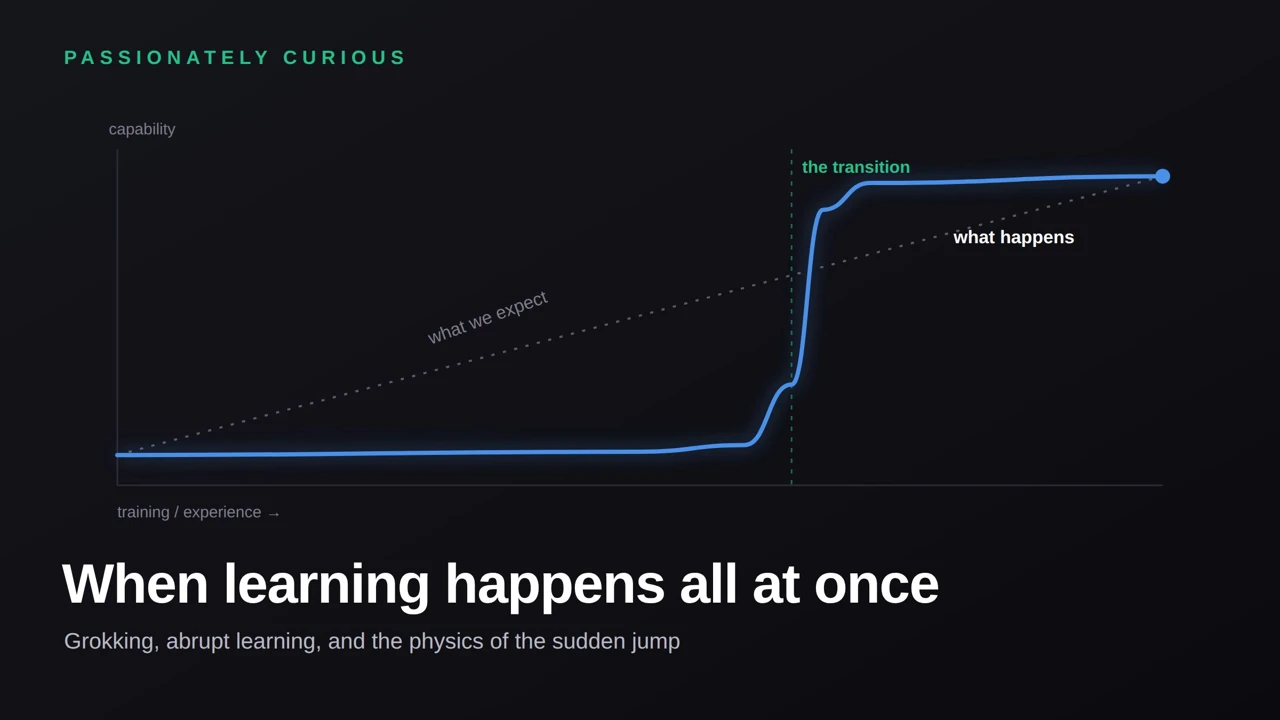
  1. When Learning Happens All at Once

    In AI, sudden "grokking" is being formalized as a physics phase transition. In the brain, learning often arrives in abrupt jumps, not only smooth curves. Learning that arrives as a switch, not a slope.

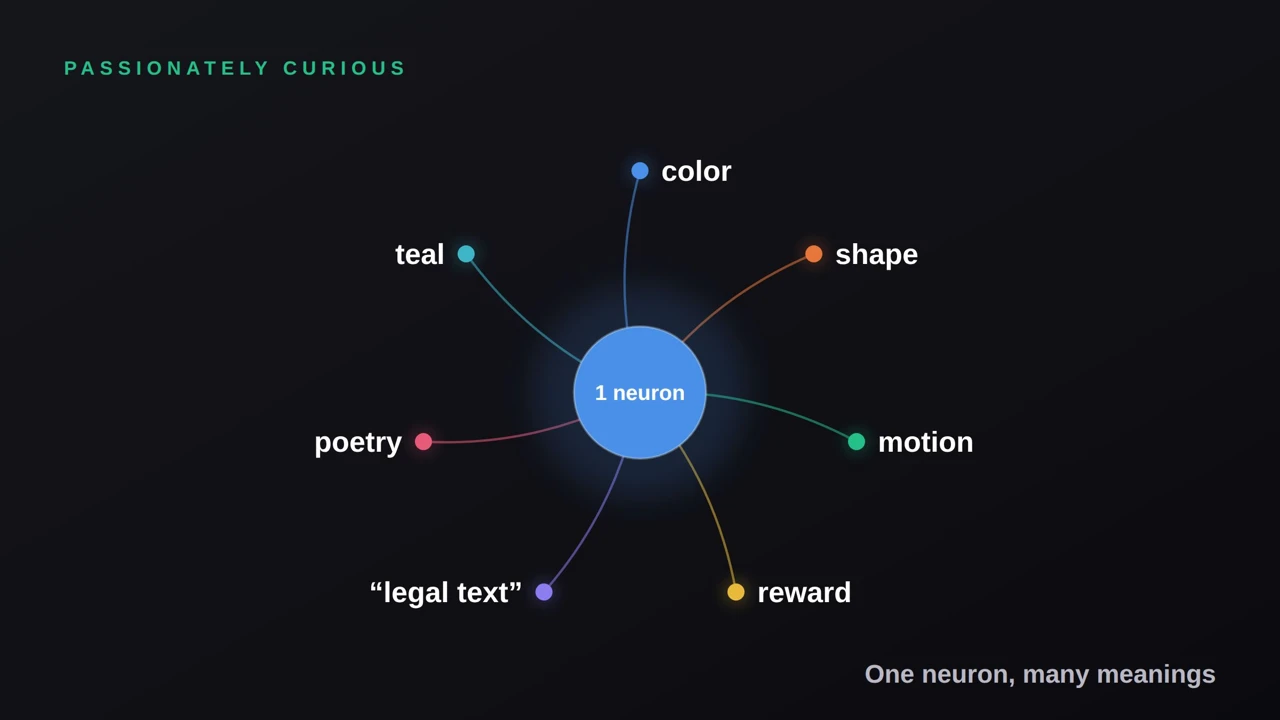
  2. One Neuron, Many Meanings: Two Papers, One Result

    A Nature study of the mouse cortex and a Nature Machine Intelligence framework for artificial networks independently reach the same conclusion: meaning is carried by populations of neurons, not by single cells.

Writing on Substack and X

AI & agentic systems

All articles on X
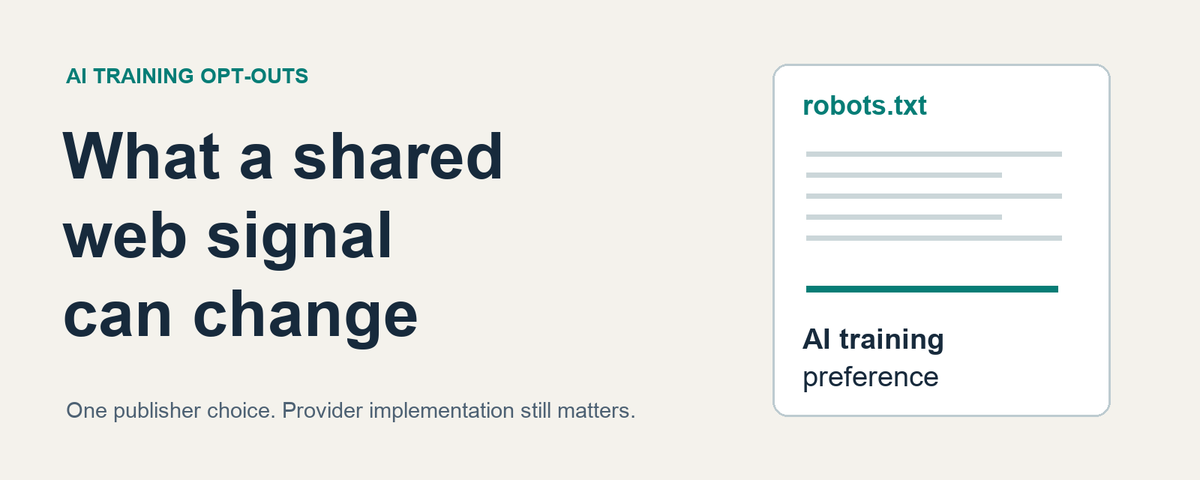
  1. AI Training Opt-Outs: What a Shared Web Signal Can Change

    A website can be useful to an AI system in different ways. Its pages might help train a model, changing the numerical settings that shape future answers.

    Read on Substack ↗Read on X ↗
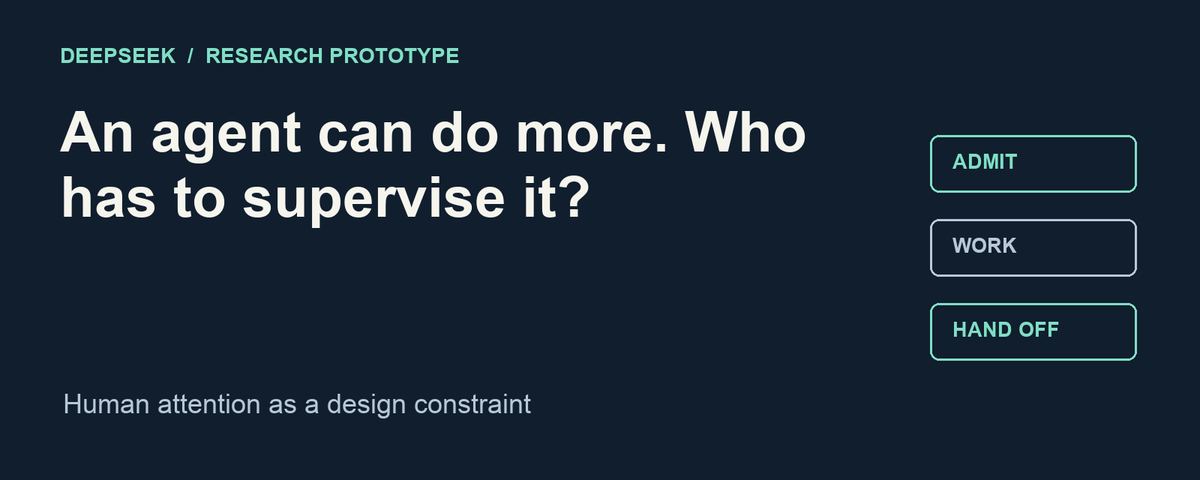
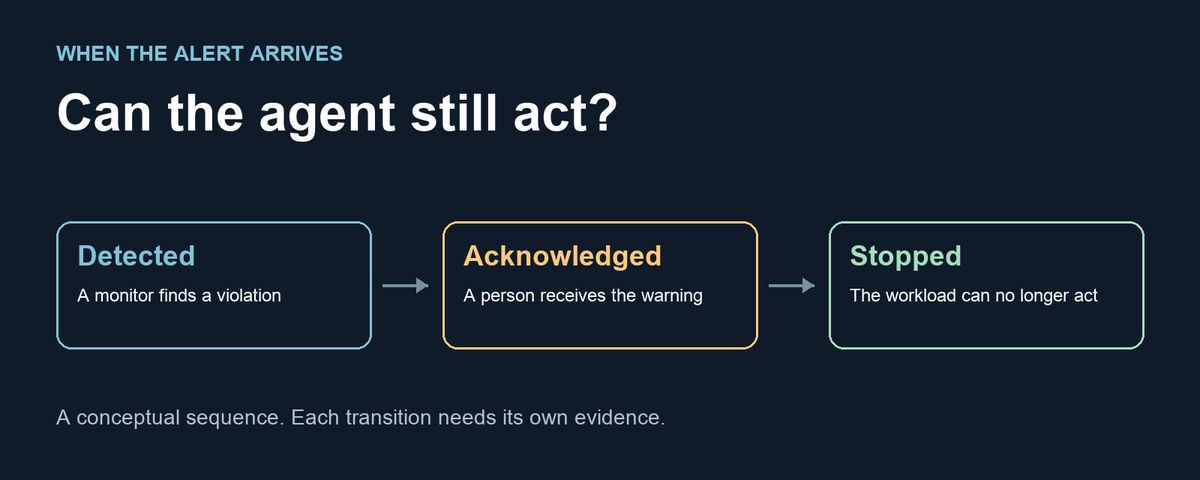
  2. Why an AI Safety Alert May Not Stop the Agent

    An AI agent can search for information, run programs and use the results to choose its next action.

    Read on Substack ↗Read on X ↗
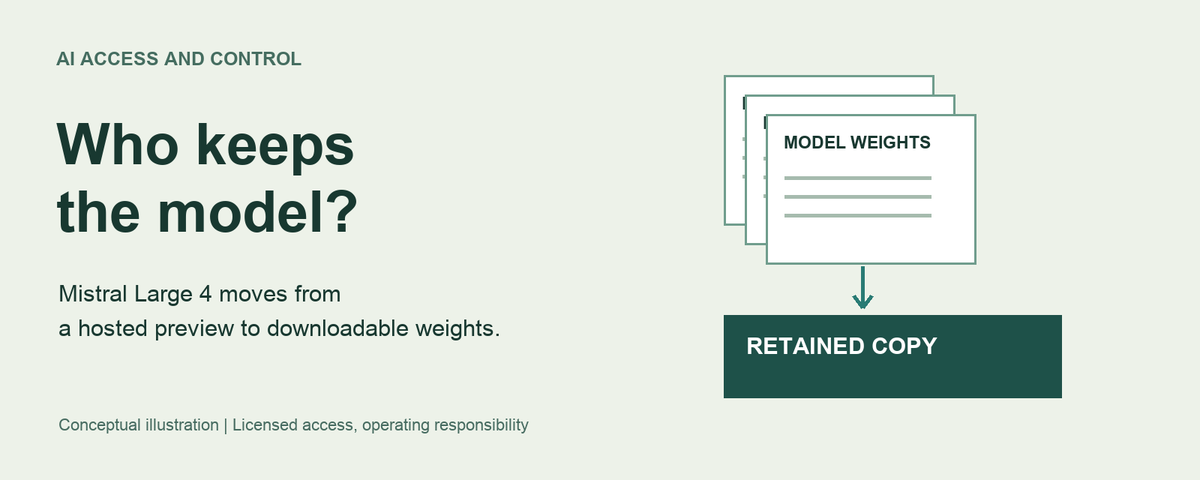
  3. Who Controls an AI Model After You Download It?

    A company using an AI service sends requests to a model operated by someone else.

    Read on Substack ↗Read on X ↗
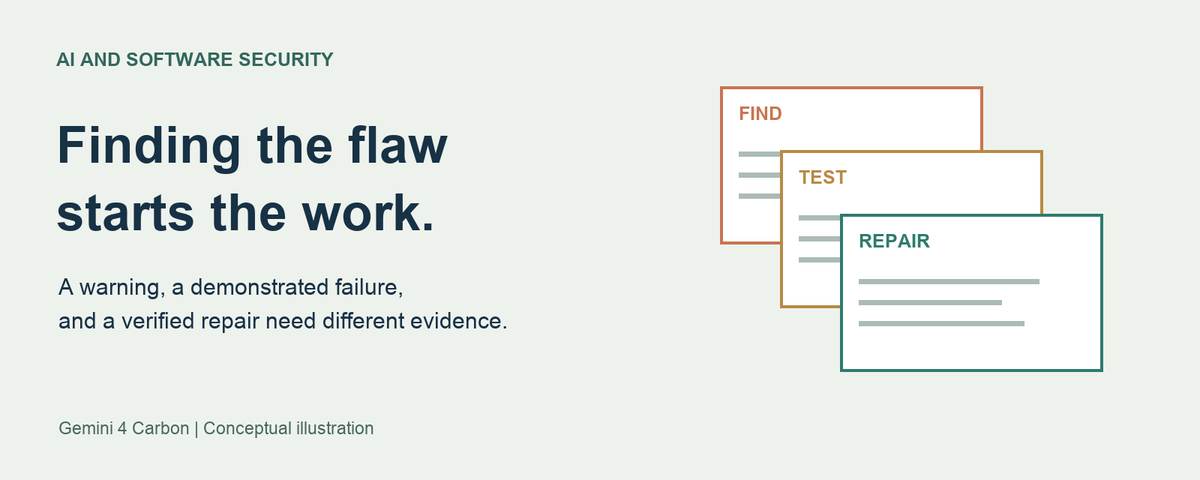
  4. Finding a Software Flaw Is Only the Start

    A document-sharing service has a simple obligation: people should be able to open only the private documents they are allowed to read. A mistake in its software could let someone bypass that rule.

    Read on Substack ↗Read on X ↗
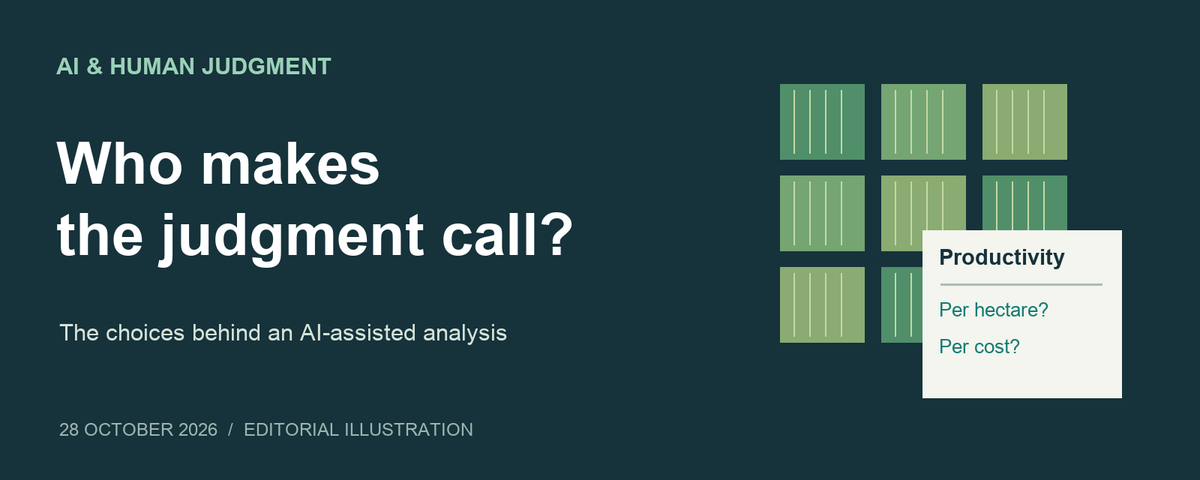
  5. Who makes the judgment call when an AI does the analysis?

    A fictional farming cooperative wants to know whether its advisory service helps its members. An analyst can calculate the change in crop yields, check the code, and give the board a recommendation.

    Read on Substack ↗Read on X ↗
Older articles
  1. When an AI World Needs Another AI to Keep It on Track
    Read on Substack ↗Read on X ↗
  2. The gap between seeing a screen and finishing the work
    Read on Substack ↗Read on X ↗
  3. AI-generated proofs could change the pace of science
    Read on Substack ↗Read on X ↗
  4. An Agent Skill Can Travel. Its Results Still Need Checking.
    Read on Substack ↗Read on X ↗
  5. Rounding Can Change What an AI Learns
    Read on Substack ↗Read on X ↗
  6. A Better Search Can Leave an AI Agent Less to Read
    Read on Substack ↗Read on X ↗
  7. TorchTPU Makes Moving a Model Easier. Optimization Comes Next.
    Read on Substack ↗Read on X ↗
  8. An AI Rewrite Can Run and Still Change the Answer
    Read on Substack ↗Read on X ↗
  9. Anthropic’s AI Coding Boom Made Moving Code a Bottleneck
    Read on X ↗
  10. Claude Traced a Cryptographic Mystery Back to a 1997 Clock
    Read on X ↗
  11. Give Hermes a Research Job You Can Run Again
    Read on X ↗
  12. I build with AI every day. Why do I still feel behind?
    Read on X ↗
  13. My Hermes Setup: A Strong Main Model, Cheaper Workers, and Proof Before “Done”
    Read on X ↗
  14. My AI Agent Audited My Dashboard. I Needed It.
    Read on X ↗
  15. One Neuron, Many Meanings: Two Papers, One Result
    Read on X ↗

Personal essays

Ambition, mortality, curiosity, and why the future matters more to me than legacy.

My Medium essays are where I write more personally about the forces behind my work and the kind of future I want to help create.

Read all seven Medium essays

Say hello

Want to compare notes on AI, engineering, or science?